Services
Marine Bulk Handling Services
Four contracted scopes that combine into one transshipment operation — crane, shuttle, stevedoring and coordination, all under ABAS management.
Service 01
Floating Crane Transshipment
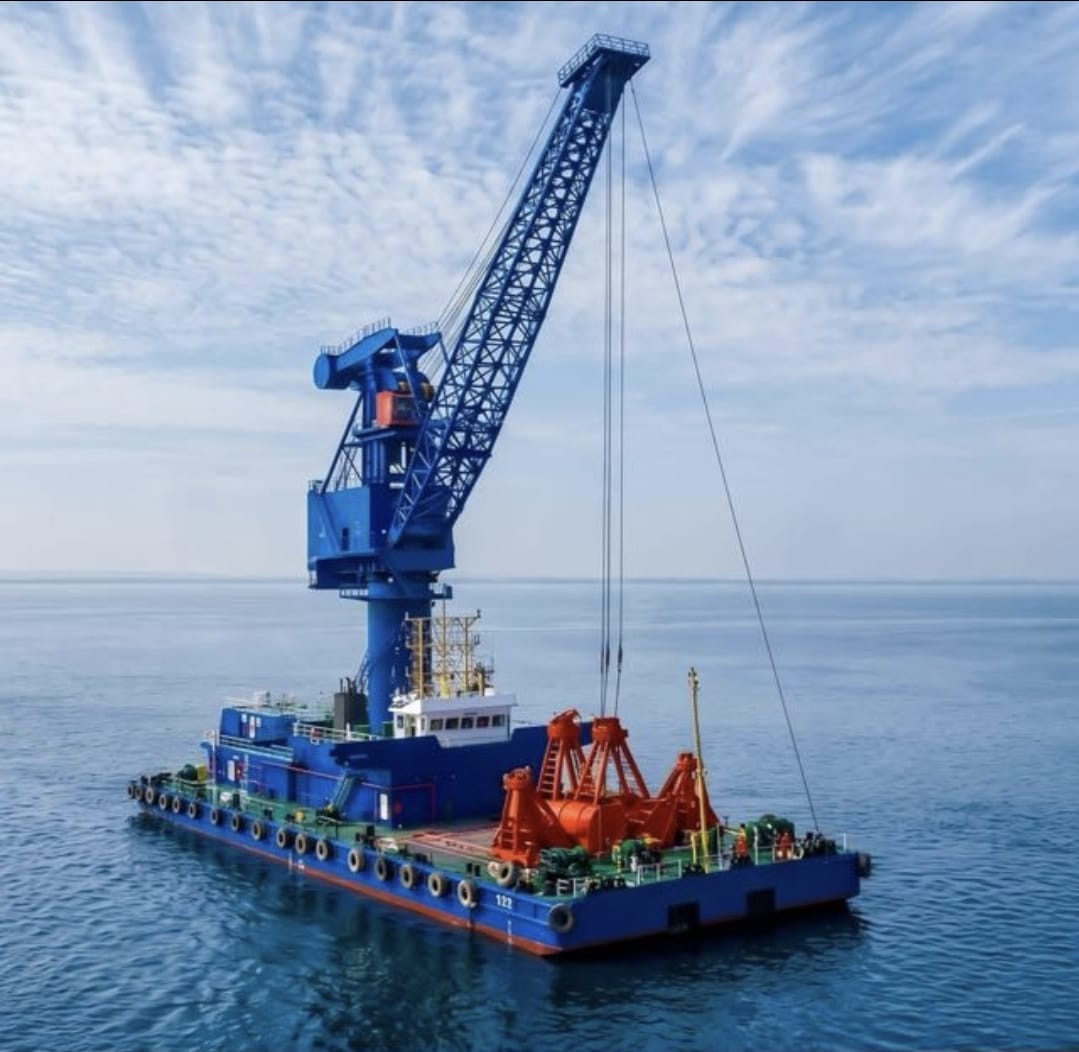
Grab-fitted floating cranes stationed at anchorage transfer cargo from barges into gearless mother vessels. ABAS provides crane, crew, stevedores, and daily reporting under one scope, giving charterers one accountable party for the discharge window.
- Gearless mother-vessel loading
- Draft-survey controlled tonnage
- 24/7 operation, weather permitting
How it runs
- 01
Pre-fixture planning
Hatch sequence, grab selection, and rate assumptions are agreed against the vessel stowage plan before the crane moves.
- 02
Mooring and rigging
The crane is positioned alongside the mother vessel while barges are brought up on the opposite side for continuous cargo supply.
- 03
Continuous discharge
Single or twin slewing cranes work in rotation, 24 hours a day when weather allows, with cycle times recorded each shift.
- 04
Trim and draft survey
Holds are trimmed to the master’s satisfaction and an independent surveyor confirms tonnage before departure.
Performance benchmarks
- Peak discharge rate
- 18,000 MT/day
- Lifting capacity
- up to 35 MT
- Grab volume
- 10 – 18 m³
- Served vessel classes
- Handysize – Capesize
Service 02
Tug & Barge Services
Own-managed tug and barge sets move cargo from river jetties and coastal terminals into the anchorage window. Because the shuttle sits under ABAS control, barge arrivals are planned around crane discharge rate, not the other way around.
- 300–330 ft deck barges
- 2 × 800 – 2 × 1,600 HP tugs
- Riverine and coastal capability

How it runs
- 01
Jetty loading
Barges are positioned below the loading conveyor or excavator spread and loaded to the agreed parcel tonnage.
- 02
River and coastal transit
Tugs tow toward the anchorage on a tidal-aware schedule, with routes planned around draft restrictions on inland waterways.
- 03
Anchorage rotation
Loaded and empty barges are rotated alongside the floating crane so discharge does not wait on shuttle availability.
Performance benchmarks
- Barge size
- 270 – 330 ft
- Parcel capacity
- 6,500 – 12,500 MT
- Tug power
- 2 × 800 – 2 × 1,600 HP
- Bollard pull
- 24 – 42 ton
Service 03
Stevedoring & Cargo Handling
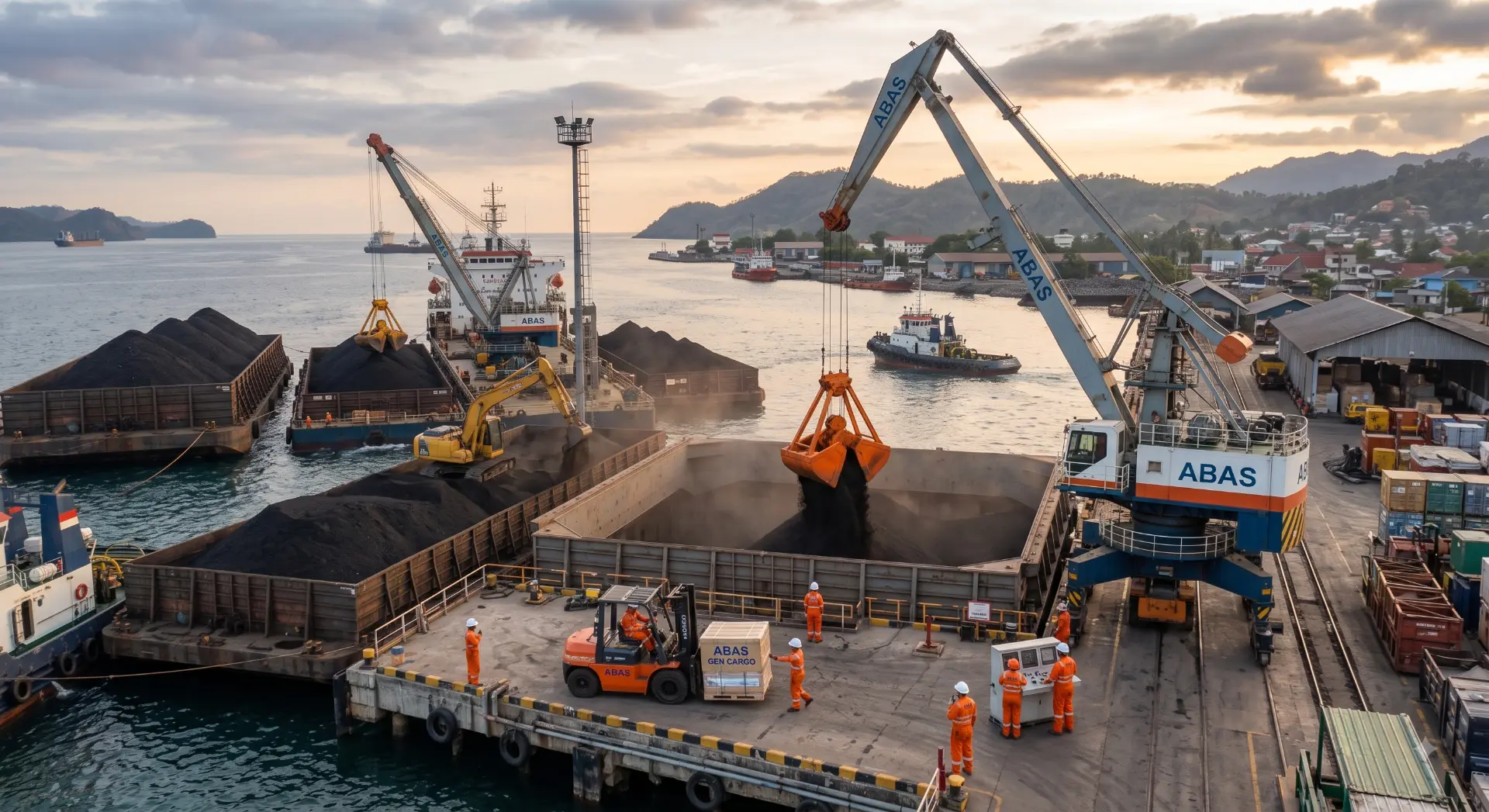
Trained stevedoring crews handle hatch planning, trimming, and cargo care for coal, sand, and crushed stone. Crews work to the charterer’s stowage plan and the master’s trim instructions, with damage-prevention protocols around coamings, hatch covers, and deck fittings.
- Hatch trimming and leveling
- Cargo-damage prevention protocols
- Independent surveyor coordination
How it runs
- 01
Stowage briefing
Hatch order and pouring points are reviewed with the chief officer during the pre-loading meeting.
- 02
Grab handling and trimming
Operators build a loading profile that reduces shift risk, with bulldozer trimming where hold geometry requires it.
- 03
Cargo care and housekeeping
Spillage is recovered, decks are swept between holds, and residues are managed to vessel standards.
Performance benchmarks
- Cargo handled
- Coal, sand, crushed stone
- Crew per crane
- 19 – 28 including supervisor
- Shift pattern
- 2 × 12 hours, continuous
- Surveyor coordination
- Independent, per fixture
Service 04
Integrated Marine Logistics
One coordination desk covers port agency, laycan management, documentation, and anchorage clearance. Charterers receive one daily operational report instead of chasing separate agents, surveyors, and barge operators for the same figures.
- Laycan and demurrage management
- Port agency and clearance
- Daily operational reporting

How it runs
- 01
Laycan and nomination
Vessel nominations, laycan windows, and anchorage slots are held and confirmed against the shipment programme.
- 02
Agency and clearance
Port agency, harbourmaster clearance, and customs documentation are handled locally at each operating anchorage.
- 03
Daily reporting
Discharged tonnage, remaining balance, weather downtime, and estimated completion are issued every morning.
Performance benchmarks
- Operating anchorages
- 6 across Indonesia
- Reporting cadence
- Daily, 08.00 WITA
- Demurrage management
- Laytime tracked per fixture
- Response time
- Request to indication within 24 hours
Need a rate for your next parcel?
Send cargo details, tonnage and laycan — the chartering desk returns an indication in under 4 hours.